
The 5 Types of Dog Anxiety and What You Can Do About Each
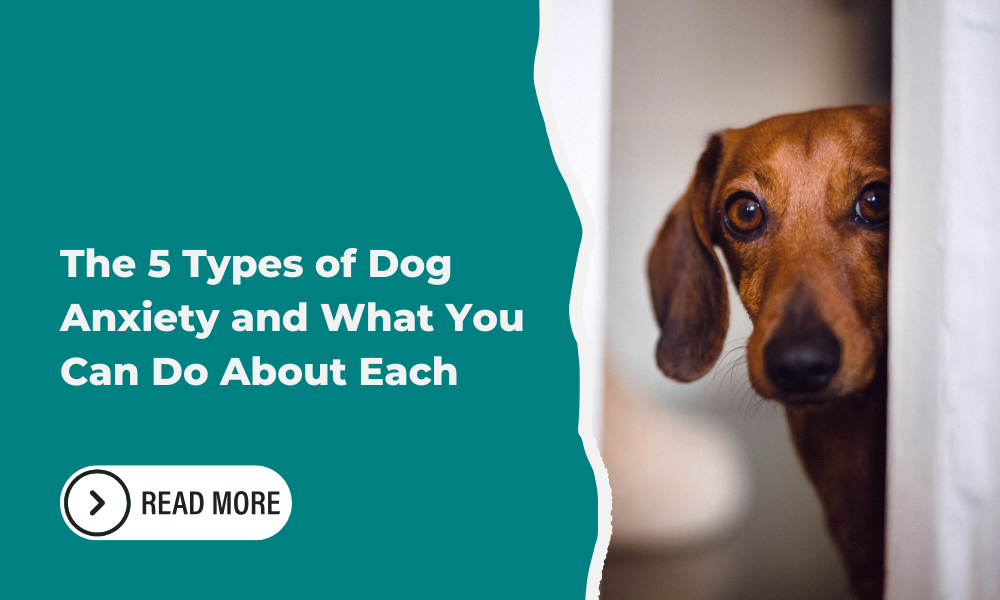
Every dog owner wants their pup to feel safe, but just like us, dogs get anxious. If your dog panics when you leave, shakes during storms, or growls at strangers, you are likely dealing with canine anxiety.
To help them feel better, we first need to understand what they are going through and how to fix it.
Fear vs. Anxiety: What’s the Difference?
- Fear is a quick reaction to an actual threat right in front of them (like a loose dog charging).
- Anxiety is worrying about a future danger. An anxious dog is stressed about what might happen next (like guessing you are about to leave the house).
The 5 Types of Dog Anxiety
1. Separation Anxiety
The panic of being left alone. These dogs might howl, chew up door frames trying to escape, or pace anxiously whenever you get ready to head out.
2. Noise Sensitivity
An extreme fear of loud or sudden sounds. Thunder, fireworks, construction, or even the beep of a smoke detector can cause these dogs to tremble and hide.
3. Social & Environmental Anxiety
Fear of unfamiliar people, other dogs, or new places (like a busy street or the vet). This usually happens if a dog wasn't safely exposed to these sights as a puppy.
4. Age-Related Anxiety
Just like dementia in humans, aging dogs can experience brain changes that cause confusion. They may wander aimlessly at night, get stuck in corners, or become easily upset.
5. Generalized Anxiety
Some dogs are simply born tightly wound. They seem chronically stressed and easily startled all day long, without one specific trigger.
Subtle Signs Your Dog is Anxious
Dogs tell us they are stressed long before they growl or bite. Watch for these subtle warning signs:
- Licking their lips when food isn't around
- Yawning when they aren't tired
- Showing the whites of their eyes ("whale eye")
- Panting heavily when it isn't hot
- Shaking, pacing, or tucking their tail tightly under their belly
Management vs. Training
There are two ways to handle anxiety:
- Management means changing the environment to protect your dog. Examples include closing the blinds so they can't see delivery trucks or playing white noise during a storm. This doesn't cure the fear, but it keeps them safe and calm.
- Training (Behavior Modification) means changing how your dog feels about the scary thing so they are no longer afraid.
How to Change Their Mind: The Gold Standard
To fix the root cause of anxiety, trainers use Desensitization and Counter-Conditioning.
First, you show your dog their trigger from a safe distance where they notice it but don't panic. Then, you give them amazing treats (like chicken or cheese). Over time, their brain realizes that the "scary" thing actually makes delicious treats appear! Slowly, you can get closer as they learn to relax.
When to Talk to a Vet
If your dog is in a state of total panic, their brain is too flooded with stress hormones to learn anything. If your dog hurts themselves trying to escape or can never calm down, speak to your vet.
Behavioral medication isn't a cop-out—it simply lowers their stress levels enough so that training can actually work.
Share On: