Puppy Biting: How to Survive the Shark Phase (And When to Worry)
This is a subtitle for your new post
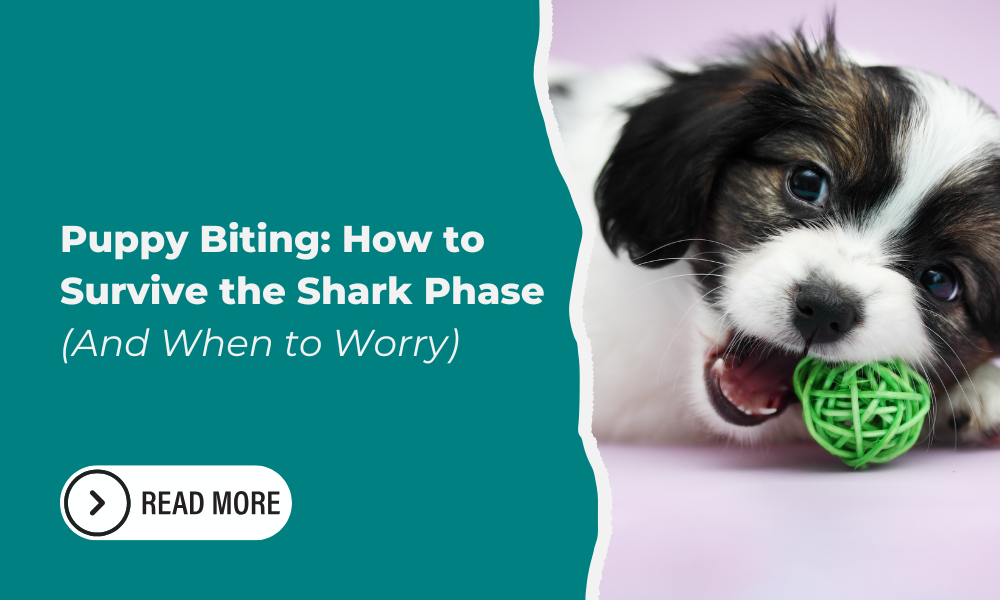
Bringing home a new puppy is pure joy—until those tiny, razor-sharp teeth make contact with your skin. Suddenly, your cuddly fur-ball feels more like a miniature great white shark!
Take a deep breath. This "shark phase" is a completely normal part of puppyhood, but surviving it requires the right game plan. Let's break down how to handle the bites, what's normal, and when it might be time to call in a pro.
Is My Puppy Normal or Just Mean?
First, let's clear something up: your puppy isn't trying to dominate you or be mean. Puppies don't have hands, so they use their mouths to explore the world.
- Normal Biting: Your puppy has a relaxed body, a wagging tail, and bites playfully while bouncing around. They might growl, but it sounds high-pitched and silly.
- Concerning Biting: The puppy’s body goes stiff, their lips curl back, and the growl sounds deep and intense. If they are biting to keep you away from a toy or food, that is a warning sign.
When the biting starts, don't just yell. Use the Traffic Light Method to teach them limits:
- Green Light (Keep Playing): Gentle mouthing that doesn't hurt is okay for very young puppies. It’s how they learn.
- Yellow Light (Slow Down): If a bite feels a bit too hard, make a soft "Ouch!" sound and pause for a few seconds. If the puppy calms down, resume playing.
- Red Light (Stop Completely): If they bite hard, the fun stops instantly. Walk away, cross your arms, or step behind a baby gate for 30 seconds. You are teaching them: “Hard bites make your human disappear.”
It can be frustrating, but squeezing your puppy's muzzle, tapping their nose, or yelling at them will backfire.
Puppies usually view physical punishment in two ways: either they think you are playing a rough wrestling game (which makes them bite more), or they become afraid of you. A fearful puppy is much more likely to grow up into a dog that bites out of self-defense. Stick to rewards and timeouts instead.
Bite Inhibition vs. Bite Prevention
These sound similar, but they are two different goals:
- Bite Inhibition (Soft Mouth): This teaches the puppy how hard it is okay to use their mouth. We want them to learn that human skin is fragile so that if they ever bite by accident as an adult, they won't cause damage.
- Bite Prevention (No Biting): This is teaching them what to bite instead. Whenever your puppy wants to chew on you, swap your hand for a rubber toy or a chew stick.
The Age Timeline: When Does it End?
The shark phase doesn't last forever. Here is what to expect as they grow:
- 8 to 12 Weeks: Peak shark phase. They are learning the rules of the world.
- 3 to 5 Months: Teething begins. Their adult teeth are pushing through, and their gums hurt. They will want to chew everything to relieve the pressure.
- 6 Months: Most adult teeth are in. If you've been consistent, the recreational biting should drastically slow down or stop completely.
When to Get Professional Help
If your puppy is past six months old and still biting hard, or if they show signs of true aggression (stiffening up, guarding items, snapping when touched), don't wait it out. Behavior issues are much easier to fix when caught early.
Taking the Lead offers a puppy training program, where we will look at your pup's specific triggers and build a personalized plan to guide you safely through the teething months.
Share On: