
Teaching the Long Down: How to Build Duration in Your Dog's Stay
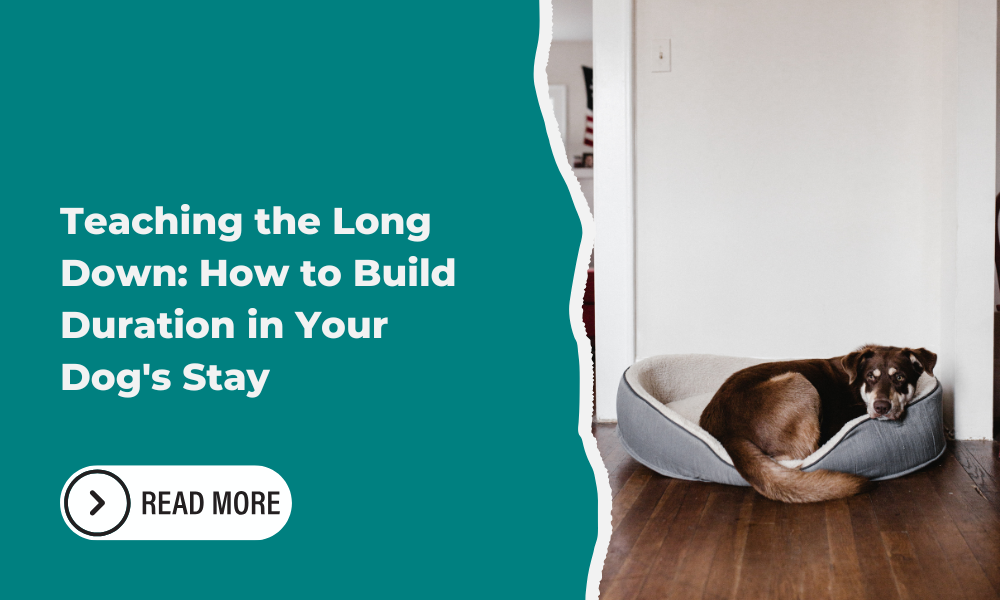
Getting a dog to lie down on command is usually pretty easy. The real challenge? Keeping them there.
A short "down" relies on impulse control for just a few seconds. A solid "long down" requires true patience, calm focus, and trust. If your pup pops back up the second you turn your back or reach for a treat, you aren't alone—duration takes intentional practice.
Here is how to build a reliable, rock-solid stay step by step.
The Core Rule: Master the 3 Ds
In dog training, every stay is built on three variables:
- Duration: How long your dog stays down.
- Distance: How far away you move.
- Distraction: What else is happening around them.
Golden Rule: Only increase one D at a time. If you double the duration from 10 seconds to 20 seconds, stay close to your dog in a quiet room. Never push for a longer stay, a further distance, and a noisy environment all on the same day!
Your 5-Day Duration Plan
Start in a distraction-free room (like your living room). Keep training sessions short—about 3 to 5 minutes at a time.
Day 1: Micro-Stays: Goal: 5 to 10 seconds.
Ask for a down. Treat continuously every 2 to 3 seconds while they stay on the floor. Release them with your release word before they get bored or break.
Day 2: Space Out the Rewards: Goal: 15 to 30 seconds.
Ask for a down, but delay the treat slightly. Treat at 5 seconds, then 10 seconds, then 15 seconds. Keep your body language calm and still.
Day 3: The 1-Minute Mark: Goal: 60 seconds.
Vary your reward intervals so your dog can't guess when the treat is coming (e.g., treat at 5s, 20s, 45s, 60s). Unpredictability keeps them engaged.
Day 4: Introduce Gentle Movement: Goal: 2 minutes.
While your dog stays down, take a step back, take a step side-to-side, or simply shift your weight. Keep returning to treat them in position.
Day 5: The 3-to-5 Minute Stretch: Goal: 3+ minutes.
Sit near your dog calmly on the couch or at a desk. Periodically drop a treat between their paws. Calm praise is key here—over-excitement will trigger them to stand.
Troubleshooting: What to Do When Your Dog Breaks
If your dog stands up before you release them, don't yell or get frustrated. A break just means you pushed one of the 3 Ds too far, too fast.
- Quietly reset: Calmly guide them back to the exact spot they left and ask for a down again.
- No treat for the reset: Only reward them for holding the stay, not for getting back down after breaking.
- Make it easier: Lower the criteria for the next rep. If they broke at 30 seconds, drop back to 15 seconds for a quick win.
The Power of the Release Word
A stay is only as good as its ending. Without a clear signal that tells your dog "you are free to get up now," they will decide on their own when the exercise is over.
Pick a specific word—like "Break!"—and stick to it.
- How to use it: Always step back to your dog, deliver your release word cheerfully, and encourage them to move or stand.
- Never let them self-release just because you walked toward them with a treat.
Taking It Public: Advanced Long Downs
Once your dog can hold a 3-minute down in the living room, it’s time to proof the skill outdoors.
Start small:
- The Front Yard: Low distraction, but fresh scents.
- The Park Bench: Sit on a park bench with your dog in a long down next to you while people walk past at a distance.
- Outdoor Cafes: Build up to a relaxed down under your table while you enjoy a coffee.

Share On: