How to Teach Focused Heeling: The Foundation of Off-Leash Control
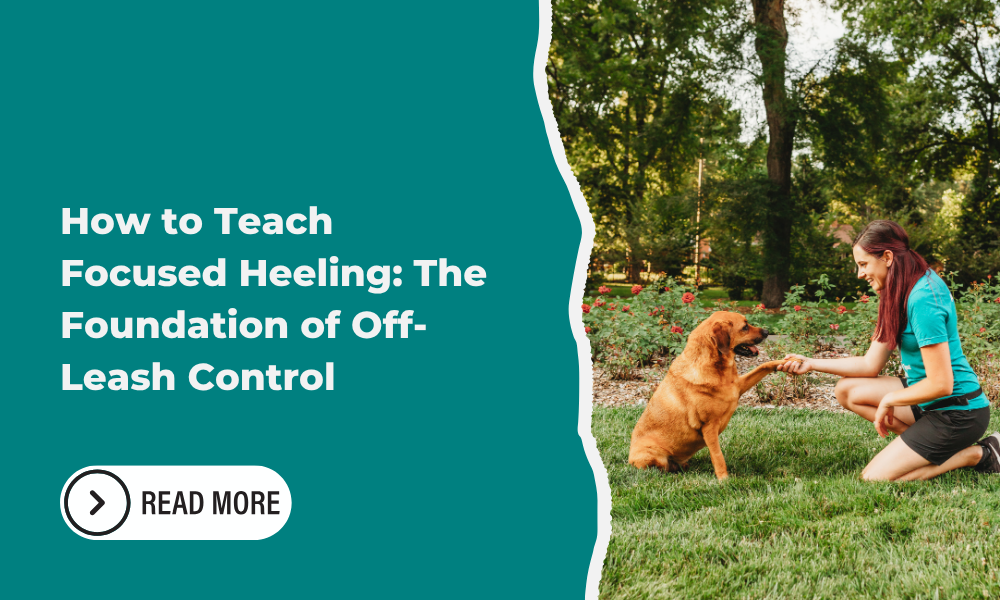
Focused heeling is the golden ticket to total off-leash control. It isn't just about teaching your dog to walk next to you—it is about training them to actively choose focus on you, even in hyper-distracting environments. When a dog maintains uninterrupted eye contact while matching your pace, off-leash obedience becomes effortless.
Loose Leash Walking vs. Focus Heeling
Many owners mix up loose-leash walking and focus heeling, but they serve completely different purposes:
- Loose Leash Walking: A casual walk. Your dog can sniff, look around, and explore, provided they don't pull on the leash.
- Focus Heel: A high-focus work state. Your dog glues their shoulder to your left hip and maintains laser-focused eye contact with you until released.
Step-by-Step Teaching Process
- Reward Focus at Your Hip: Start indoors with low distractions. Position your dog at your left side and hold a high-value treat at your chest level. The moment your dog looks up to make eye contact with your face, mark the behavior (say "Yes!") and reward directly at your hip line.
- Add the First Steps: With your dog in position, take 1 to 2 steps forward. Use a treat lure near your chest to draw their eyes up as you move. Mark and reward the instant they stay glued to your side while looking up. Move before the focus breaks.
- Introduce the Cue: Only name the behavior once focus is reliable. Once your dog consistently glances up as you move, add your verbal cue (e.g., "Heel") right as you take your first forward step.
Building Duration and Distance
Don't rush to walk a block right away. Build focus systematically:
- Increase criteria slowly: Move from 2 steps to 5 steps, then 10 steps, rewarding frequently before focus breaks.
- Add movement changes: Practice fast paces, slow motion, and sharp 90-degree turns to teach your dog that maintaining focus requires watching your body movements.
- Introduce distractions: Move from your living room to the backyard, then to quiet neighborhood streets, slowly scaling up the environment's complexity.
Troubleshooting Common Heel Problems
- Sniffing the Ground: This happens when criteria jump too fast or rewards are too low. Lower the distraction level, up the treat value, and reward faster before their nose hits the grass.
- Lagging Behind: If your dog trails behind, you may be moving too fast or rewarding too late. Keep energy high and deliver treats slightly ahead of your hip to pull them forward.
- Forging Ahead: If your dog pops out in front, stop immediately. Back up 2 steps to re-engage eye contact, then reward strictly behind your hip line to pull their position backward.
Using Focus Heeling in Real Life
Focus heeling isn't meant for a 30-minute daily neighborhood stroll—it takes heavy mental energy for a dog to maintain that level of concentration. Instead, use short 30-to-60-second bursts in real-world scenarios: passing a reactive dog on a sidewalk, navigating a crowded park entrance, or safely walking through a busy parking lot. It gives your dog a clear, structured job to do when distractions are at their peak.


Share On: