Is Your Dog Ready for Off-Leash? The Complete Readiness Checklist
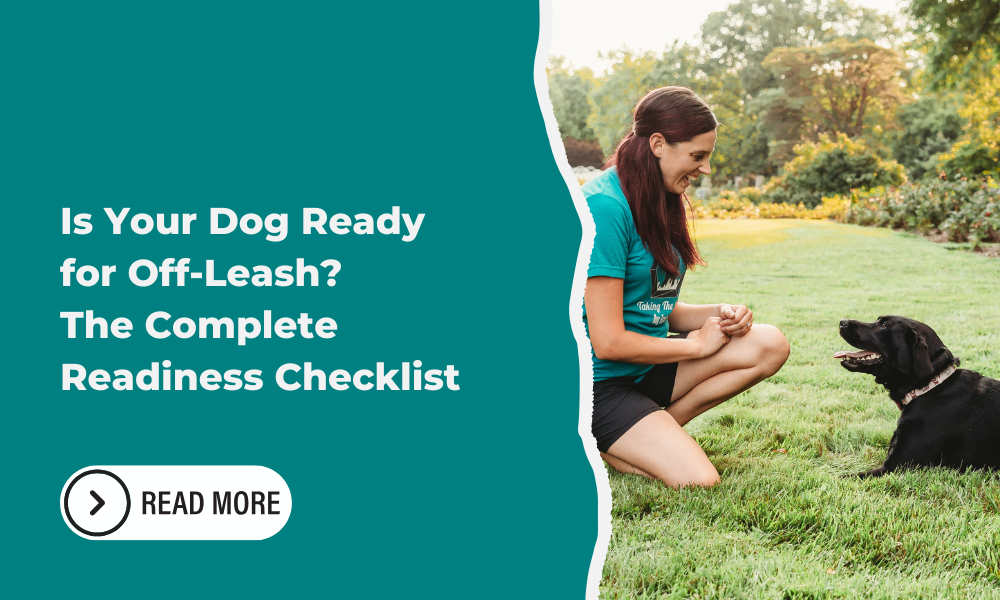
Every dog owner dreams of running freely in open spaces with their pup. But unclipping that leash too early is one of the most dangerous decisions you can make. Traffic, wild animals, aggressive dogs, and unexpected noises can quickly turn a fun walk into a crisis.
Before you unclip, use this simple checklist and step-by-step roadmap to make sure your dog is truly ready.
The 6-Skill Readiness Checklist
Your dog should master all six skills consistently before having off-leash privileges:
- Instant Recall ("Come"): They turn and sprint back to you the first time you call.
- Name Attention: Looking at you immediately when their name is spoken, ignoring what they were investigating.
- An Auto-Sit/Stop: Halting automatically when you stop moving or when given a "Wait" command.
- Leave It: Dropping or walking away from high-value items (food scraps, dead animals, trash).
- Check-Ins: Voluntarily looking back or returning to your side without being prompted.
- Focus Under Mild Distraction: Obeying basic commands even when another dog or person walks past.
Step 1: Test in a Controlled Environment
Start in low-distraction spaces like your living room or hallway, then move to your backyard. Practice calling your dog away from toys or food. If your dog ignores a recall command indoors, they are definitely not ready for the outside world.
Step 2: Use a Long-Line as a Bridge Step
Transition to a 15-to-30-foot long-line lead in an open area. A long line gives your dog the feeling of freedom while keeping you in full control. Practice calling them back and reward every single successful return with high-value treats.
Step 3: Try Off-Leash in Fenced Areas First
Before heading into unfenced nature, test your dog's off-leash freedom in a fully enclosed environment like a quiet dog park during off-peak hours, a fenced tennis court, or a private rented dog field (like a Sniffspot). Observe how they react when completely untethered.
Step 4: The Final Test—High-Distraction Environments
Once your dog excels in fenced spaces, test them on a long line in places with real-world triggers: near busy trails, around squirrels, or near other playing dogs. Your dog is only ready for true off-leash freedom when their recall beats out high-value real-world distractions.
Keep Breed Considerations in Mind
Genetics play a huge role in off-leash safety:
- Sighthounds & Scenthounds (Beagles, Greyhounds): Driven heavily by instincts to chase or track; off-leash reliability takes significantly longer to train.
- Herding & Working Breeds (Border Collies, Shepherds): Naturally focus closely on handlers and often master off-leash skills much faster.
Always Have an Emergency Recall Protocol
Every off-leash dog needs a distinct, non-negotiable Emergency Recall—a specific cue (like a referee whistle or a unique word like "Jackpot!") that is trained exclusively with high-value rewards like real chicken or hot dogs. Use this emergency signal strictly for real hazards or rare practice sessions, never for routine calls.

Share On: