
A Guide to Puppy Potty Training: Schedules, Routines, and Best Practices
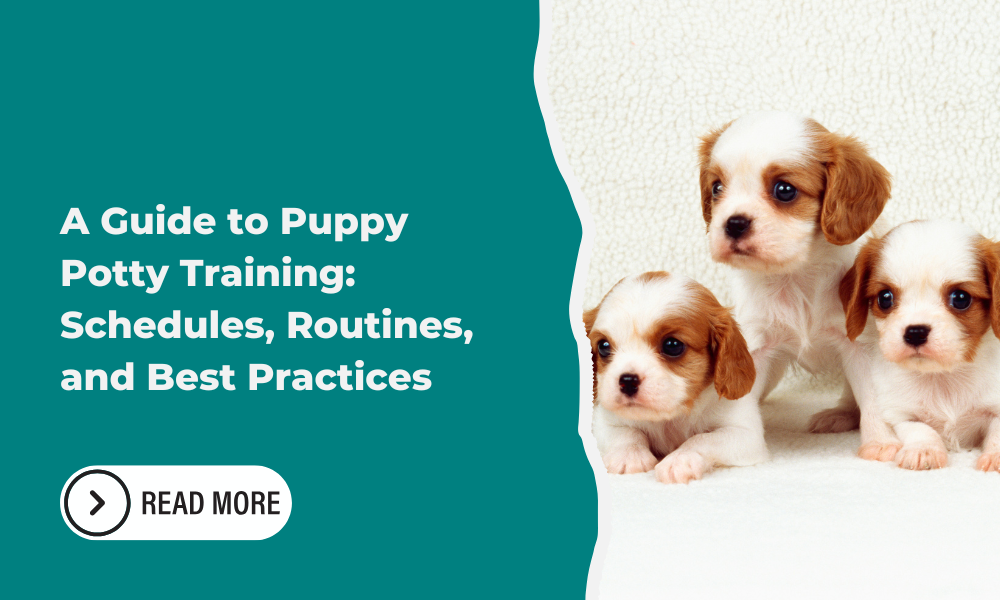
If you are currently cleaning up your third mess of the day and feeling frustrated, take a deep breath. Here is the golden rule of housebreaking: accidents are a schedule problem, not a puppy problem.
Puppies do not mess on the carpet out of spite. They simply have tiny bladders, fast metabolisms, and no concept of house rules yet. By setting a solid routine, supervising constantly, and using smart management strategies, you can make potty training quick and stress-free.
How Often Puppies Need to Go by Age
A general rule of thumb for bladder capacity is one hour for every month of age (up to a maximum of 8–9 hours once grown).
- 8 to 12 Weeks: Every 1–2 hours.
- 3 to 4 Months: Every 3–4 hours.
- 5 to 6 Months: Every 5–6 hours.
- 7+ Months: Capable of holding it 6–8 hours (though regular breaks are still ideal!).
Keep in mind that puppies need to go out immediately after key "potty triggers": waking up from a nap, playing hard, or finishing a meal and a drink.
Establishing a Schedule and Routine
Potty training relies on consistency, and your crate is your best tool. Puppies naturally dislike sleeping in their own mess, making the crate an incredible aid for bladder control.
- Nighttime Sleeping: Keep your puppy sleeping in their crate at night until they are at least one year old.
- Create Crate Positivity: Make the crate a happy place. Feed their meals inside it and let them use it as a peaceful safe spot for naps.
- The Morning Routine: Before you open the crate door in the morning, get fully dressed with your shoes on. Attach their leash while they are still inside the crate, pick them up or walk them straight out, and head for the door.
- The Potty Spot Technique: Take them to the exact same patch of grass every time on a 6-foot leash. Plant your feet in one spot, give them the full length of the leash to sniff, and wait.
Reward Timing, Cue Words, and Timers
- Pick a Cue Word: As soon as they start doing their business, say a cue phrase like "Go potty" or "Busy, busy."
- Perfect Timing: The moment they finish, offer high-value praise and a treat within 2 seconds. Rewarding them outside reinforces that going on the grass is the ultimate win.
- Using Timers for Indoor Freedom: Once your puppy successfully goes potty outside, set a timer for supervised house freedom based on their age in months (e.g., a maximum 3-hour timer for a 3-month-old puppy).
Handling Unsuccessful Potty Breaks
Potty breaks should be business trips, not playtime. Limit potty attempts to 5–10 minutes.
If your puppy doesn’t go:
- Bring them right back inside and place them directly in their crate. Do not grant indoor freedom.
- Wait 20 minutes.
- Take them back outside to the same spot and try again.
- Repeat this crate-to-outside cycle until they successfully go.
Supervision and Accidents
When your puppy is enjoying indoor freedom, constant supervision is mandatory. They should never wander unattended. Valid supervision means:
- Keeping them directly in your line of sight.
- Having them on an indoor tether attached to your belt.
- Placing them safely in their crate when your attention is needed elsewhere.
Cleaning Accidents to Prevent Repeats
If an accident does happen, do not scold or punish your puppy—simply clean it up. Use an enzymatic cleaner specifically formulated for pet messes. Regular household cleaners leave behind scent traces that human noses can't detect, which tells the puppy, "This is a great spot to pee again!" Enzymatic cleaners break down the organic proteins entirely.
Potty Training Pitfalls to Avoid
- Ditch the Pee Pads: Pee pads teach puppies that it’s okay to relieve themselves inside the house on soft surfaces, which slows down full potty training. Throw them away and stick strictly to outdoor training.
- Be Cautious with Potty Bells: While hanging a bell on the door can teach puppies to alert you, older dogs (around 1 year old) often learn to misuse them as a fun button to go outside and chase squirrels. If your dog starts ringing it just to play, ignore it or remove the bell altogether.
Timeline Expectations
Be patient with your pup and yourself! Most puppies begin truly mastering their potty training around 6 months of age and are fully reliable by 9 months. With patience, a strict schedule, and plenty of praise, you’ll have a fully housebroken dog before you know it!

Share On: