
Dog Dental Disease: The Silent Health Crisis 80% of Dogs Face by Age 3
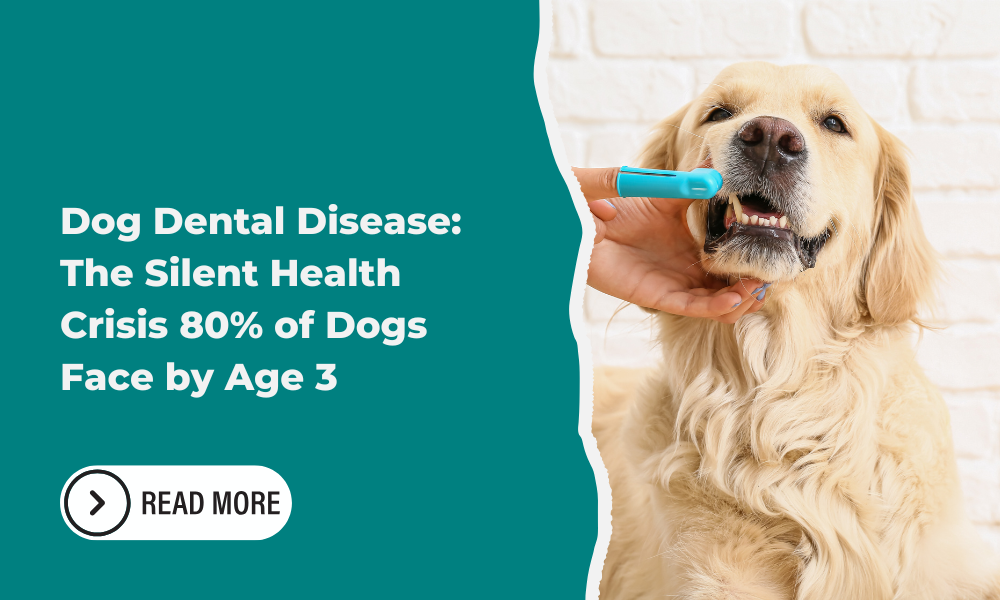
Over 80% of dogs show signs of active periodontal disease by age 3, according to data from the American Veterinary Medical Association (AVMA). Despite being the single most common health issue in adult dogs, it remains a silent epidemic because dogs instinctively hide pain, leaving owners unaware until irreversible damage occurs.
How Dental Disease Progresses
Periodontal disease is a continuous, four-stage process:
- Plaque Formation: Soft, clear bacteria build up on teeth within hours after eating.
- Tartar Build-up: If untreated, plaque mineralizes into hard, yellowish-brown calculus (tartar) within 24 to 48 hours.
- Gingivitis: Tartar spreads beneath the gumline, causing red, inflamed, and bleeding gums.
- Periodontitis: Bacteria destroy the bone and soft tissues supporting the teeth, causing tooth loss, excruciating pain, and deep structural infection.
The Link to Organ Damage
Dental disease isn't just an oral issue—it affects the entire body. Inflamed gums act as a gateway for bacteria to enter the bloodstream. Once circulating, these bacteria settle in major organs, causing micro-infections that lead to endocarditis (heart valve damage), chronic kidney infection, and liver strain.
Signs Owners Miss
Dogs rarely stop eating due to tooth pain. Instead, owners miss subtle early indicators:
- "Bad breath" (often dismissed as normal dog breath, but actually a sign of bacterial infection)
- Slight changes in chewing habits, such as dropping food or chewing on one side
- Light redness or bleeding along the gumline
- Rubbing or pawing at the face
- Reduced interest in hard chew toys
At-Home Dental Care Guide
- Daily Brushing (The Gold Standard): Use enzymatic pet toothpaste (never human toothpaste, which contains toxic ingredients like xylitol) with a soft pet toothbrush or finger brush.
- VOHC-Accepted Chews & Treats: Look for products carrying the Veterinary Oral Health Council (VOHC) seal, which certifies clinical proof of plaque and tartar reduction.
- Water Additives & Diets: Specially formulated dental diets and additives can slow plaque accumulation between brushings.



Share On: