
From Chaos to Calm: Why Crate Training Matters
Taking the Lead • February 6, 2026
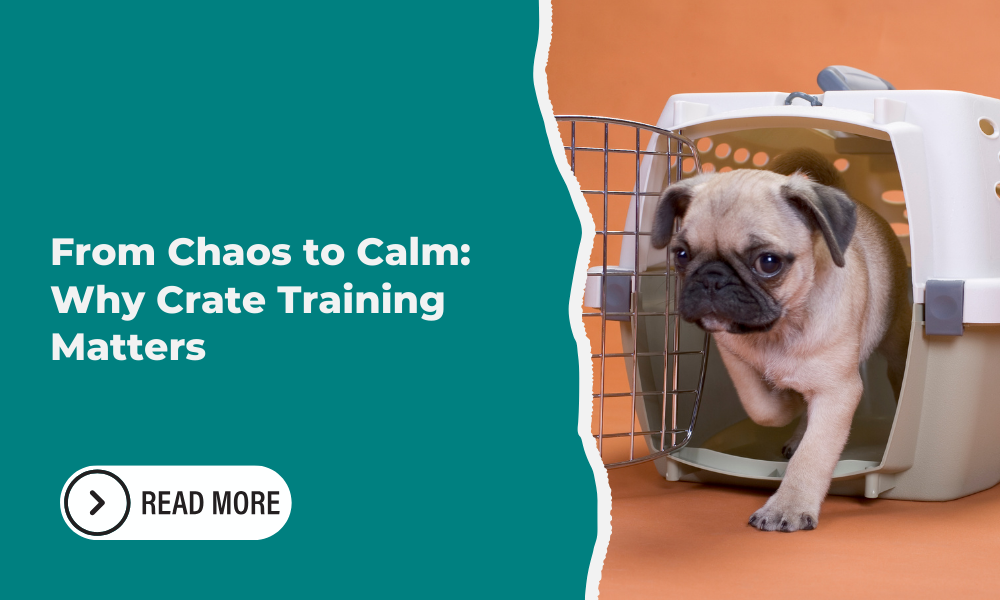
Crate training is one of the most valuable tools you can give your dog—not as a form of punishment, but as a way to create structure, calm, and confidence. When introduced properly, a crate becomes a safe, comfortable space where your dog can relax, reset, and feel secure.
At Taking the Lead, we view the crate as a life skill that supports both training and everyday management.
Benefits of Crate Training
1. Relaxation
Crate training teaches your dog how to self-soothe and truly settle. Instead of pacing, barking, or searching for stimulation, your dog learns that the crate is a place to relax and turn their brain off.
2. Confidence
Spending time in the crate helps build your dog’s confidence away from you. They learn that being alone is safe and predictable, which can reduce anxiety and stress-related behaviors.
3. Management
A crate is an effective management tool when your dog cannot be supervised. It prevents unwanted behaviors like barking out the window, counter surfing, chewing, or getting into unsafe items while you’re away.
4. Travel & New Environments
Because the crate can travel with you, it provides a familiar and comforting space in new locations—whether you’re visiting family, staying in a hotel, or attending events. Familiar structure helps dogs settle faster in unfamiliar environments.
5. Potty Training
Dogs naturally avoid eliminating where they eat and sleep. Crate training supports potty training by helping your dog develop bladder control and a clear understanding of appropriate bathroom habits.
Rules of the Crate
Consistency is key when it comes to crate training. Following clear rules helps your dog understand expectations and settle more quickly.
- Feed all kibble in the crate
- Always crate your dog when you leave the house
- Up to 4 daylight hours per day in the crate (this can be done all at once or broken into chunks)
- Multiple dogs = each dog gets their own crate
- Never open the crate door if your dog is barking or whining
Opening the crate while your dog is vocal teaches them that noise gets them freedom. Waiting for calm reinforces the behavior you want.
A Tool for Life
Crate training is not about confinement—it’s about clarity, safety, and balance. When used correctly, the crate becomes a powerful tool that supports training, reduces stress, and creates a calmer home. With consistency and the right approach, your dog will learn that the crate isn’t something to resist—it’s a place to rest, reset, and thrive. 🐾

Is your dog truly ready for off-leash freedom? Master the 6 essential safety skills and follow our 4-step roadmap to train a reliable recall before unclipping the leash.

Over 80% of dogs develop dental disease by age 3. Learn the hidden signs of canine periodontitis, how it impacts major organs, and actionable at-home care tips to protect your dog's health.

Protect your new dog with this room-by-room home proofing guide. Learn essential safety tips to secure electrical cords, toxic plants, trash cans, and common household hazards to keep your pup safe and happy.
Share On: