Impulse Control: The Hidden Foundation of a Well-Behaved Dog
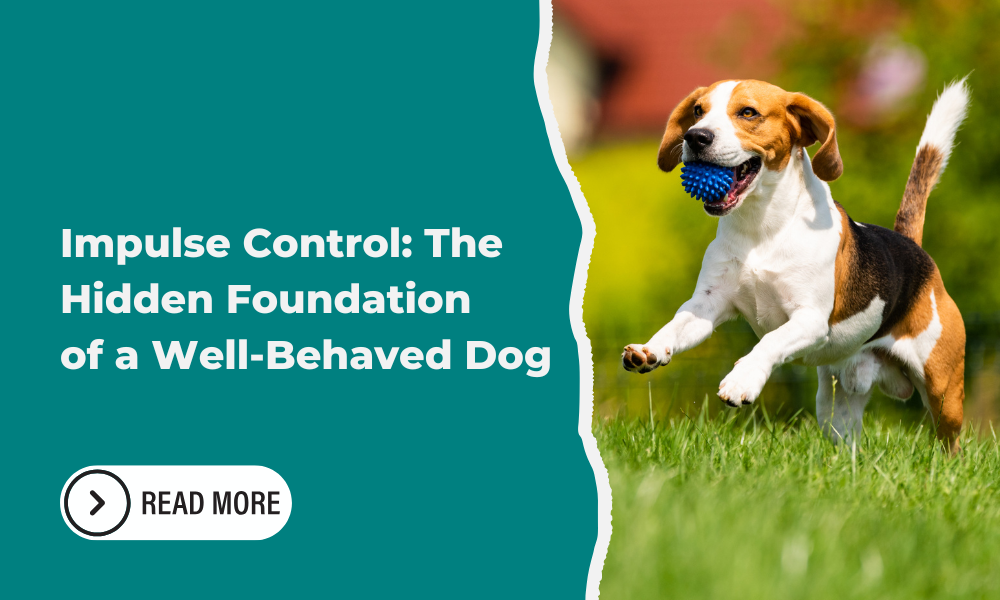
Ever feel like your dog acts first and thinks never? Whether it's bolted doors, snatched counter snacks, or frantic lunges at passing squirrels, the root issue usually isn't a lack of obedience. It’s a lack of impulse control.
Impulse control is simply a dog’s ability to resist an immediate temptation in exchange for a better reward later. Think of it as emotional regulation for your pup.
Why It Matters More Than Any Command
You can teach a dog to "sit" or "down" in a quiet living room, but those commands fail the moment the world gets exciting if the dog lacks self-control.
Teaching impulse control isn't about crushing your dog’s spirit; it’s about giving them the mental brakes they need to function safely in a chaotic human world. When a dog learns to check their impulses, they stop reacting purely on instinct and start looking to you for guidance.
4 Easy Exercises to Build Your Dog’s Mental Brakes
Building impulse control is like strengthening a muscle—it takes step-by-step practice. Here are four foundational exercises to get you started:
1. The "Leave It" Progression
Don't just use this when your dog grabs a dropped piece of chicken. Teach it as a game.
- Step 1: Hold a treat in a closed fist. Let your dog sniff and paw at it. The second they look away or stop trying to get it, click or say "Yes!" and give them a treat from your other hand.
- Step 2: Move to an open palm. If they dive for it, close your hand.
- Step 3: Drop it on the floor and cover it with your foot if they rush it. They learn that ignoring the item is the only way to get rewarded.
2. Door Threshold Waiting
Bolting out the door is a massive safety hazard.
- Approach the door and put your hand on the knob. If your dog gets excited and moves forward, remove your hand.
- Crack the door open an inch. If they move, shut it immediately.
- Repeat until you can open the door completely while they remain calm. Give a release cue like "Break" before they are allowed to step through.
3. Sit Before All Good Things
Make "sit" the universal key that unlocks life’s pleasures. They don't get their food bowl until they sit nicely. The leash doesn't get clipped on until they sit. The backyard door doesn't open until they sit. This teaches them that calm manners—not pushiness—get them what they want.
4. Disengage from Distractions
When you’re out on a walk, reward your dog for simply looking at a distraction (like another dog or a bicycle) and then voluntarily turning back to look at you. This builds the habit of checking in rather than locking onto things that overexcite them.
Looking for faster results?
Building emotional regulation takes an immense amount of consistency. Our
Day Train program heavily focuses on impulse control, teaching your dog how to navigate real-world distractions calmly so you can enjoy a much more relaxed companion at home.
Share On: