Dog Body Language 101: What Your Dog Is Really Telling You
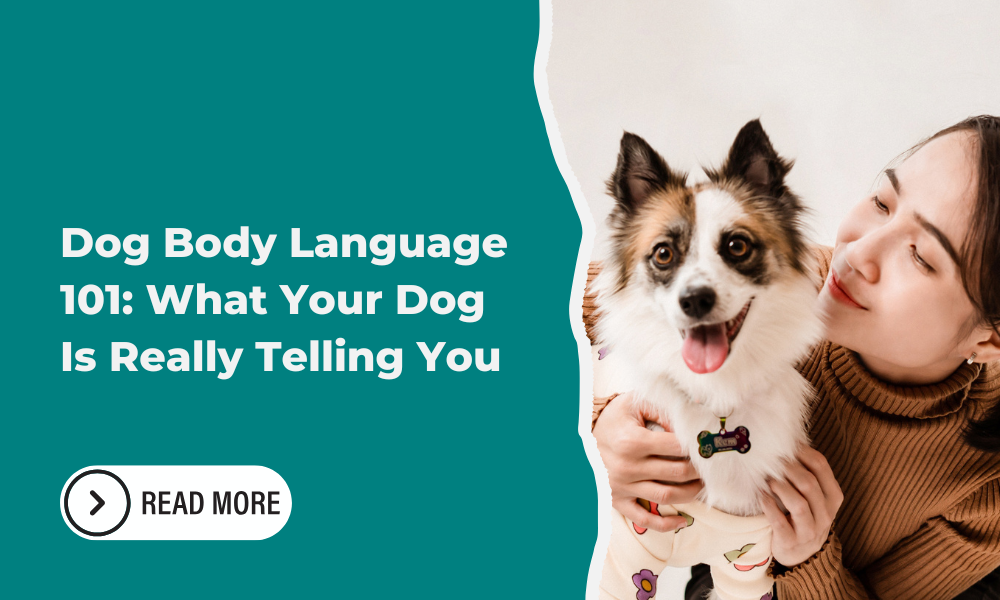
Have you ever looked at your dog and thought, "I wish you could just tell me what you’re thinking"? The truth is, they already are.
Most owners wait for a bark or a growl to understand their dog’s mood, but by then, the dog has likely been "shouting" with their body for several minutes. Missing these subtle signals is why many owners are "surprised" by a snap or a sudden bolt under the couch. Understanding the silent language of canines isn’t just a party trick—it’s the key to a safer, happier bond.
The Portrait of a Happy Dog
A relaxed dog is "curvy." When a dog is comfortable, their body lacks tension. Look for these "green light" signals:
- The Tail: It’s not just about the wag; it’s about the height. A neutral, mid-level wag—or the famous "helicopter tail"—indicates joy.
- The Eyes: Look for "soft eyes" (relaxed lids) and squinting.
- The Ears: Held in a natural position (not pinned back or pricked sharply forward).
- The Posture: A "wiggly" spine. If their whole back end moves with their tail, they are in a social, relaxed state.
Reading Between the Lines (Stress & Anxiety)
Dogs often show stress through "displacement behaviors"—normal actions performed out of context. If you see these, your dog is asking for space:
- The Lip Lick: A quick flick of the tongue when there’s no food around.
- The Yawn: Not because they’re tired, but because they are trying to self-soothe.
- Whale Eye: When the dog turns their head slightly but keeps their eyes on the "threat," revealing the whites of their eyes.
- The "Shake Off": Shaking their body as if they are wet, usually right after a stressful interaction (like a forced hug).
Fear vs. Aggression — The Critical Difference
While they look different, fear and aggression are often two sides of the same coin. Most aggression is actually fear-based.
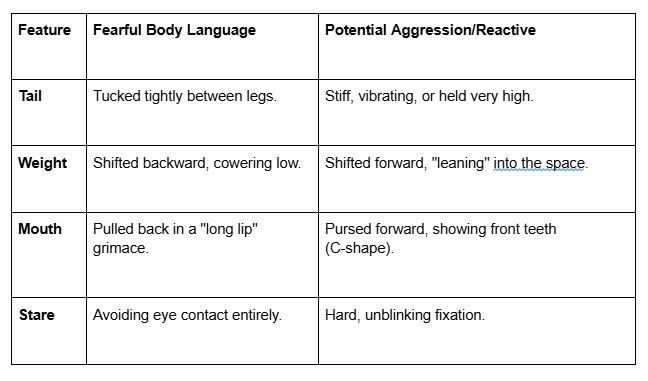
The Golden Rule: A dog that is "perfectly still" is not a calm dog. A freeze is often the final warning before a bite.
A dog’s "vocabulary" changes depending on where they are.
- At the Dog Park: A high-speed chase might look like fun, but if the "prey" dog has a tucked tail and isn't taking turns being the chaser, it’s no longer play—it’s bullying.
- At the Vet: A dog who is usually social may "shut down," becoming very still and compliant. This isn't bravery; it’s an extreme fear response.
- At the Front Door: A barking dog with a wagging tail isn't always happy; if the wag is stiff and high, it’s a "territorial alert," not a greeting.
Don't wait for a "misunderstanding" to happen. Learn to read your dog's unique personality and build a relationship based on trust, not guesswork.
Book a Free Transformation Session to assess your dog's behavior with a pro today.

Share On: